Global emissions of carbon dioxide, methane, nitrous oxide and other gases have increased rapidly over the past century, and particularly over the last 50 years.
CO2 causes global warming by trapping heat in the Earth’s atmosphere, leading to a rise in temperatures that can have far-reaching effects on climate patterns and ecosystems around the world.
Since the Industrial Revolution, atmospheric CO2 concentrations have increased by over 40%, caused by burning fossil fuels, deforestation, and industrial processes, leading to a corresponding increase in global temperatures.
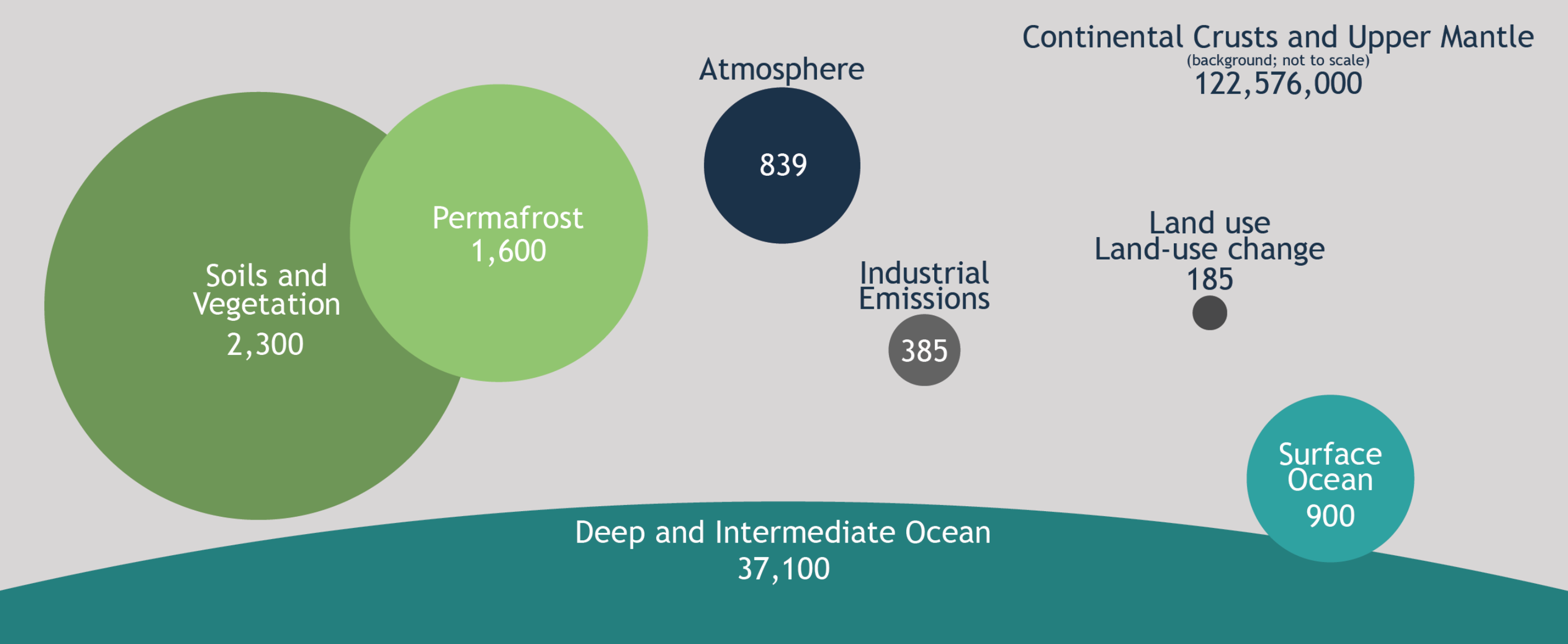
Each year, about 40 Gigatons of CO2 (40 billion tons) are added to the atmosphere and scientists believe that the excess CO2 is about 500 Gigatons.

What are Carbon Credits?
A carbon credit is a permit or certificate that represents a certain amount of greenhouse gas emissions, typically one metric ton of carbon dioxide equivalent (CO2e). It is a market-based mechanism that allows organizations to offset their carbon footprint by investing in projects that reduce greenhouse gas emissions.
Carbon credits are generated by projects that reduce or avoid greenhouse gas emissions, such as renewable energy projects, energy efficiency initiatives, and reforestation projects. These projects are evaluated and approved by accredited organizations and their resulting carbon credits are then sold on the carbon market to companies, governments, and individuals who want to offset their own emissions or to financial buyers.
Carbon credits are a key component of the global effort to address climate change and reduce greenhouse gas emissions. There are two main types of carbon credits: voluntary carbon credits and compliance carbon credits.
Voluntary carbon credits are bought and sold on voluntary carbon markets, which are established and operated by private companies, organizations, and individuals. These credits are not linked to any mandatory emissions reduction targets or regulations and are typically used by organizations to offset their own greenhouse gas emissions.
Compliance carbon credits, on the other hand, are bought and sold on compliance carbon markets, which are established and regulated by governments. These credits are linked to mandatory emissions reduction targets or regulations, such as those established under the United Nations Framework Convention on Climate Change (UNFCCC) or the European Union Emissions Trading System (EU ETS). Compliance carbon credits are typically used by companies and organizations to meet their emissions reduction obligations under these targets.
As we indicated, the excess carbon in the atmosphere is estimated at 500 Gigatons of CO2, which would be equivalent to 500 billion carbon credits.
The market for carbon credits purchased voluntarily (rather than for compliance purposes) helps direct private financing to climate-action projects that would not otherwise get off the ground. These projects can have additional benefits such as biodiversity protection, pollution prevention, public-health improvements, and job creation.
Carbon credits also support investment into the innovation required to lower the cost of emerging climate technologies. And scaled-up voluntary carbon markets would facilitate the mobilization of capital to the Global South, where there is the most potential for economical nature-based emissions-reduction projects.
 Climate Change, AI and Computing
Leave a comment